The universe is a vast pla
 ce. Hundreds of billions of galaxies vast. It, like Earth, is evolving, has evolved over billions of years. Those hundreds of billions of galaxies each have hundreds of billions of stars; how could we think that we are the most significant form of life in the grand scheme of the universe? We happened to evolve on a planet that happens to be the perfect distance from the star it is orbiting, and the further away from our home planet our scope gets, the smaller we realize we are, relative to the infinitude of our existence. To believe that the force behind this never-ending reality and its natural processes enforces the morality of one intelligent species orbiting one star is extremely self-serving and narrow minded.
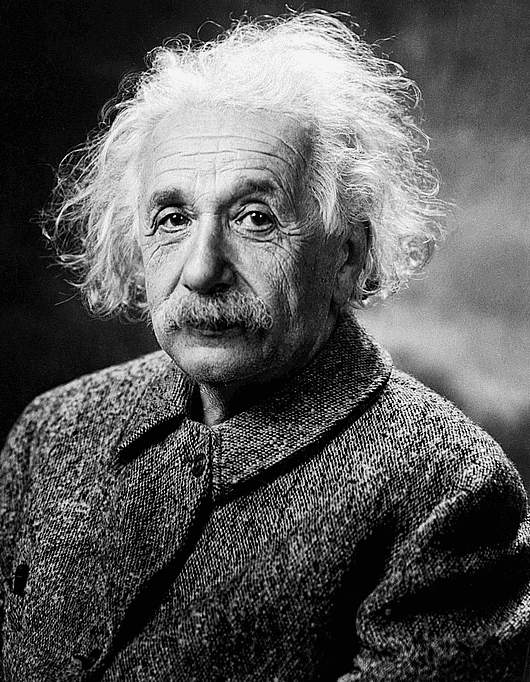
I prefer Albert Einstein's philosophy of religion. Einstein was a deeply religious person, reverent towards the arrangement of natural laws that govern the movements of celestial bodies and Earthly nature alike; to paraphrase, he described his religion as "veneration for this subtle, intangible, and inexplicable force beyond anything we can comprehend." When asked if he believed in God, Einstein replied, “I believe in Spinoza’s God who reveals himself in the orderly harmony of what exists, not in a God who concerns himself with fates and actions of human beings” (Max Jammer: Einstein and Religion, Princeton University Press 1999, p. 49). Good and evil are strictly relative to human needs and desires, and the universe continues to churn whether we are present or not; "life flows on within you and without you," if I may. The viewpoint that the force that moves the stars judges our every action creates an environment of irrational fear and a debasement of humans' intellectual capacities.
This weekend I made the drive from Los Angeles to Phoenix and back. As will happen on most long drives in America, I came across a fair amount of Christian-influenced billboards, bumper stickers, and license plate holders: a representation of the marriage of mainstrea
 m organized religion in the United States and the commercialization that permeates every facet of the country (sorry to go all Peanuts). I saw a "God Speaks" billboard for the first time in a while: those all-black posters with white writing that are signed by God. The message on the billboard enforced the idea that God is just as annoyed with the human experience as humans are: something akin to this God Speaks advertisement, which reads, "Keep using my name in vain, I'll make rush hour longer. -God" (see right). I think that neither what language comes out of our mouths, nor the marginal time added to our commutes are a concern of God's (to repeat, I do not think "concerns" really figure into the deistic picture); furthermore, I would argue that this specific mental image of the supreme power does not leave room for higher human spiritual fulfillment; if a deity is sitting around for all time and making me slightly irritated at traffic congestion, simply because I said two or three specific words out of frustration or sleep-deprivation, then this deity should not be perceived as all-wise or all-powerful. Put in another way, the God of these billboards (I believe He has a sizable marketing and advertising budget) reinforces the anthropomorphic psychological deity, and I do not believe that a God who is simply a human in omniscient form leaves much allowance for spiritual evolution or transcendence to higher religious planes of being, experiences of which we are certainly capable.
Christianity, in my opinion, has the potential to be larger than its myths. I was raised Presbyterian, attending church every Sunday until the age of fourteen. I consider myself, at present, a relatively moral person - I enjoy helping people out, I try to turn the other cheek, I am not violent - and I credit the Christian environment for imprinting many of these feelings and intuitions unto me. What I do not fondly remember in my childhood experience is the acceptance of the myth-stories of the Bible at a literal level: using metaphors including heaven and hell and the virgin birth as truth, the veracity of miracles, tales of resurrection. I wish for the Christian populace to completely utilize the moral goodness of Jesus' message, while muffling the symbolic and mythological, turning these tales into background noise. My argument is that religious people do not need to accept the thaumaturgic as a precursor to either spiritual fruition or moral goodness; the powers of God can be much more subtle and completely inexplicable, as Einstein would have it, and we can still feel a veneration for the concept of life itself, without confusing ourselves into too narrow scopes of understanding.